
Can I Sell My House As-Is to Avoid Foreclosure in Barrington, RI?
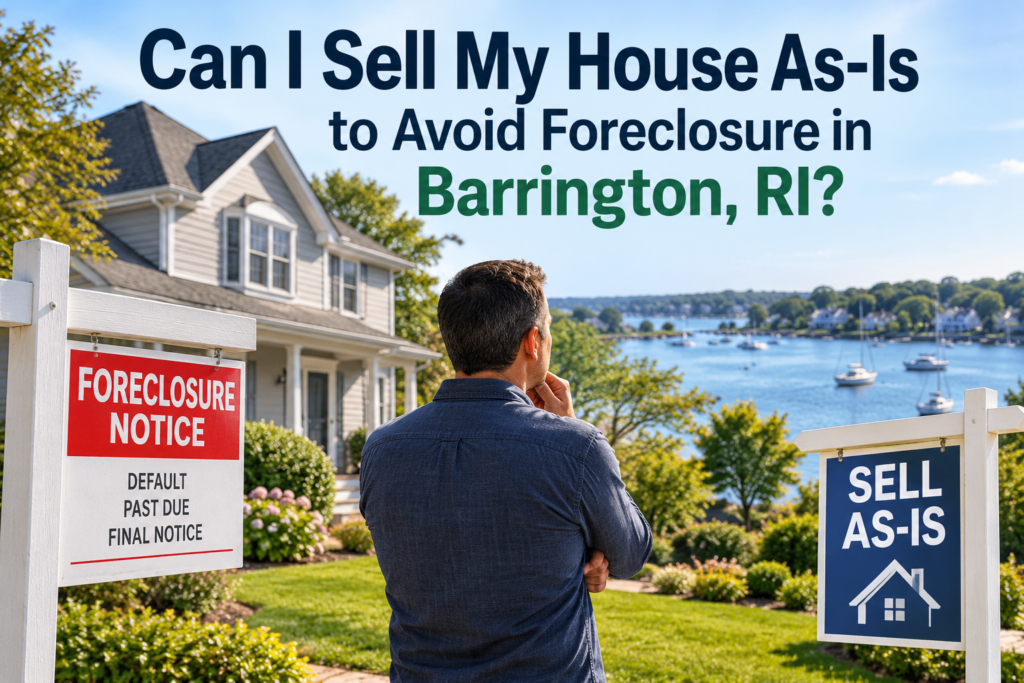
Yes, you can sell your house as-is to avoid foreclosure in Barrington, RI, as long as you complete the sale before the foreclosure process takes away your ownership rights. Selling as-is allows you to offer your property in its current condition without spending money on major repairs or renovations. The money from the sale may help you pay off your mortgage, avoid a completed foreclosure, and protect your remaining home equity.
Falling behind on mortgage payments can create serious financial pressure. You may be dealing with job loss, medical expenses, unexpected bills, or changes in your household income. When monthly mortgage payments become difficult to manage, foreclosure can feel unavoidable.
However, homeowners in Barrington have options. Selling a property before foreclosure may provide a practical way to settle mortgage debt and move forward financially.
Whether your house is in Hampden Meadows, Rumstick, West Barrington, or another part of town, understanding how an as-is home sale works can help you make an informed decision.
This guide explains how to sell your Barrington home before foreclosure, what Rhode Island law requires, how to compare cash buyers with traditional buyers, and what to do when your mortgage balance is higher than your home’s value.
Can You Sell Your House Before Foreclosure in Barrington, RI?
Yes. Rhode Island homeowners can generally sell their properties before foreclosure is completed, even if they have missed mortgage payments or received a foreclosure notice.
When you sell a house with an outstanding mortgage, the mortgage is normally paid from the sale proceeds at closing. The closing attorney also addresses other obligations that must be resolved for the property to transfer.
If the selling price covers your mortgage payoff, applicable liens, and closing expenses, you may receive the remaining money.
For example, imagine you own a house in Barrington worth approximately $450,000 and have a mortgage payoff of $320,000.
If you sell the property for $450,000, you could potentially receive a significant amount of equity after paying the mortgage and transaction expenses.
However, if the property sells for less than the amount required to satisfy the mortgage and other obligations, you may need additional funds or your lender’s approval for a short sale.
The most important factor is timing. Your home must be sold before the foreclosure sale takes away your ability to complete an ordinary sale.
You should also understand that accepting an offer does not automatically stop foreclosure proceedings. If you already have a scheduled auction date, communicate with your lender and seek legal guidance immediately.
What Does Selling a House As-Is Mean in Rhode Island?
Selling a house as-is means you are offering the property in its existing physical condition without promising to complete repairs before the transaction closes.
This approach is useful for homeowners who cannot afford home improvements or need to complete a sale without unnecessary delays.
For example, your Barrington property might have an aging roof, outdated kitchen, plumbing problems, water damage, or unfinished renovations.
Instead of investing additional money into repairs, you can market the house to buyers willing to accept its condition.
Some real estate investors and cash home buyers specialize in purchasing properties that require improvements.
Does Selling As-Is Mean You Have No Responsibilities?
No. Selling as-is does not remove your legal responsibilities as a property seller.
Rhode Island law generally requires sellers to disclose known deficient property conditions to buyers before signing a purchase agreement.
Under Rhode Island General Laws § 5-20.8-2, sellers must provide written disclosures about known problems in accordance with the statute.
For example, if you know your basement has flooded repeatedly or your roof has an existing leak, you generally must disclose those conditions when required by law.
An as-is contract also does not automatically prevent buyers from conducting inspections or negotiating repairs and credits. The buyer’s rights depend on the contract.
The main advantage is that you can seek buyers who are comfortable purchasing the property without requiring you to make major improvements.
How Does Foreclosure Work in Rhode Island?
Before deciding whether to sell your home, it helps to understand how foreclosure works.
Foreclosure is the legal process through which a mortgage lender enforces its rights against a property after the borrower defaults on the mortgage agreement.
In Rhode Island, lenders may use a nonjudicial foreclosure process when the mortgage contains a valid power-of-sale provision. Judicial foreclosure is also possible.
A nonjudicial foreclosure generally allows the lender to proceed without filing a traditional foreclosure lawsuit, provided the applicable legal requirements are satisfied.
What Happens When You Miss Mortgage Payments?
When you miss a mortgage payment, your loan becomes delinquent. The lender or mortgage servicer may contact you about the overdue amount and possible repayment arrangements.
Late fees may apply according to your loan agreement, and missed payments may be reported to credit bureaus.
Federal mortgage servicing rules generally prohibit initiating the legal foreclosure process until a borrower is more than 120 days delinquent, with limited exceptions.
The Consumer Financial Protection Bureau’s foreclosure timeline guide explains these protections and encourages borrowers to contact their servicers early.
However, the 120-day rule does not mean every homeowner has the same amount of time before an auction. Foreclosure schedules depend on the circumstances, legal notices, mortgage terms, and applicable state law.
Rhode Island Foreclosure Mediation
Rhode Island also provides a foreclosure mediation process for certain eligible residential mortgages.
Under Rhode Island General Laws § 34-27-9, qualifying borrowers with owner-occupied residential properties may have an opportunity to participate in mediation before a power-of-sale foreclosure moves forward.
The process is intended to help borrowers and mortgage holders consider alternatives to foreclosure.
Possible outcomes may include a loan modification, another workout arrangement, a short sale, or other mutually acceptable solutions.
Eligibility depends on the property, mortgage, and statutory requirements. Not every loan is covered, and mediation does not guarantee a particular result.
If you receive a foreclosure mediation notice, respond promptly and review your options with an experienced professional.
Why Selling Your House As-Is May Help You Avoid Foreclosure
Homeowners facing foreclosure often need a solution that balances speed, cost, and financial recovery.
Selling as-is may offer several advantages compared with repairing a property or allowing foreclosure to continue.
Avoid Expensive Home Repairs
Preparing a house for the traditional real estate market can require significant spending.
You may need to repair plumbing problems, replace damaged flooring, paint walls, update electrical systems, or fix roofing issues.
If you are already having difficulty paying your mortgage, these costs can make your financial situation worse.
An as-is sale allows you to look for buyers who will purchase the home without requiring you to pay for major renovations.
This does not guarantee that every buyer will accept the property’s condition, but it may reduce your upfront expenses.
Reduce Preparation Time
Selling a renovated house often requires additional planning and preparation.
Contractors must be scheduled, materials purchased, and repairs completed before the property is ready for marketing.
When foreclosure is approaching, you may not have enough time for these projects.
Selling as-is can allow you to begin the selling process sooner because extensive renovations are not necessary before listing or accepting offers.
Protect Your Remaining Equity
One of the most important reasons to consider selling before foreclosure is the possibility of preserving home equity.
Your equity is generally the difference between your home’s market value and the outstanding debts secured by it.
When a house sells voluntarily, you have an opportunity to negotiate a price and evaluate the potential amount remaining after closing.
A completed foreclosure does not necessarily eliminate every possibility of surplus proceeds, but it reduces your control over the transaction and may introduce additional expenses.
Selling before foreclosure may help you retain more control over your financial outcome.
Avoid a Completed Foreclosure on Your Credit History
A completed foreclosure can have serious consequences for your credit history and future borrowing opportunities.
Selling your home and paying off the mortgage before foreclosure may help you avoid that specific credit event.
However, this does not erase previously reported missed payments.
Late mortgage payments may still affect your credit, even when the property is sold successfully.
Have Greater Control Over Moving
Foreclosure may leave homeowners with less control over when they must leave their property.
A voluntary sale allows you to negotiate closing and possession dates with the buyer, subject to the foreclosure deadline and contract terms.
This may provide more time to arrange housing, organize your belongings, and plan the next stage of your life.
How to Sell Your House As-Is to Avoid Foreclosure in Barrington, RI
If you have decided to sell, following an organized process can help you avoid unnecessary delays.
Step 1: Contact Your Mortgage Servicer Immediately
The first step is to contact the company that manages your mortgage payments.
Explain that you are experiencing financial difficulties and are considering selling the house.
Ask for your current mortgage payoff amount, including outstanding principal, accrued interest, fees, and other charges.
You should also ask whether foreclosure proceedings have begun and whether an auction date has been scheduled.
A payoff statement is important because your regular monthly mortgage statement may not show the full amount necessary to satisfy the loan.
If foreclosure is already in progress, tell your servicer that you intend to sell the property.
Ask whether the lender will consider postponing the foreclosure sale if you obtain a legitimate purchase agreement.
A postponement is not automatic and should be confirmed in writing.
Step 2: Estimate Your Barrington Property’s Value
Before choosing a buyer, determine how much your property might reasonably sell for.
The estimated value should reflect its location, size, condition, recent comparable sales, and current buyer demand.
You can consult a local real estate professional or request a professional appraisal.
The Town of Barrington Tax Assessor also provides access to property information and assessment resources.
However, municipal assessments are intended for property tax purposes and should not be treated as an exact prediction of market value.
Compare your home with recently sold properties that have similar features and conditions.
If your house needs substantial repairs, consider how those issues may affect buyer offers.
Step 3: Calculate Your Total Mortgage and Property Debts
Your mortgage balance is only one part of the financial picture.
You may also have a home equity loan, home equity line of credit, unpaid property taxes, judgment liens, or other obligations affecting the title.
Contact the relevant lenders and obtain updated payoff information.
A closing attorney can investigate recorded liens and determine what must be addressed before the property can transfer.
Barrington’s Town Clerk and Land Evidence Records provide information about recorded property documents, including mortgages and deeds.
Understanding these obligations early can help prevent surprises shortly before closing.
Step 4: Choose Between a Traditional Listing and a Cash Sale
There are several ways to sell a property as-is, but two common approaches are listing with a real estate agent and selling directly to a cash buyer.
A traditional listing may expose your home to more potential buyers. More competition can sometimes produce a higher sale price, especially when the property has desirable features.
However, some buyers may need mortgage financing, inspections, or appraisal approval.
These requirements can create delays.
A direct cash sale may avoid mortgage underwriting and certain financing-related problems.
Investors may also be more comfortable purchasing properties that need repairs.
However, cash buyers often offer less than a well-marketed property might receive from a conventional buyer.
The right choice depends on your foreclosure deadline, property condition, financial obligations, and priorities.
Step 5: Request and Compare Offers
Do not assume the first offer you receive is the best one.
If time permits, compare offers from qualified buyers and evaluate the total financial outcome.
A higher purchase price is not always better if the offer includes contingencies that make closing uncertain.
For example, one buyer might offer more money but require mortgage approval, repairs, and additional negotiation.
Another buyer might offer less but provide proof of funds and fewer contingencies.
Consider the closing date, purchase price, buyer’s financial ability, inspection conditions, fees, and cancellation rights.
Never sign an agreement without understanding its terms.
Step 6: Review the Purchase Agreement
Before accepting an offer, carefully review the contract.
Pay attention to the agreed purchase price, deposit amount, closing date, property condition terms, and contingencies.
You should also understand whether the buyer can assign the contract to another person or company.
Some real estate investors use assignment agreements. These are not automatically improper, but the arrangement should be transparent.
If you are dealing with foreclosure, consider asking a Rhode Island real estate attorney to review the agreement.
Professional guidance may help you identify contractual obligations that could create problems.
Step 7: Prepare for Closing
Once you have accepted an offer, the closing process begins.
The buyer, lender, and closing professionals may need to verify ownership, review the title, obtain payoff statements, and resolve outstanding obligations.
Even when selling as-is, you may still need to provide required disclosures and other transaction documents.
You should prepare the following information as early as possible:
- Mortgage account and servicer information
- Current mortgage payoff statement
- Foreclosure notices and auction information
- Property tax information
- Home equity loan or other lien details
- Available deed and ownership documents
- Known property condition disclosures
- Homeowners association documents, if applicable
- Proof of identity and information requested by the closing attorney
Having these documents organized can reduce avoidable delays.
Step 8: Complete the Sale Before Foreclosure
The final step is completing the closing and ensuring the required mortgage obligations are paid.
When the transaction closes, the closing professional generally distributes the sale proceeds according to the settlement statement.
The mortgage payoff is sent to the lender, and other applicable obligations are addressed.
If money remains after the transaction expenses and required payments, you may receive those proceeds.
If a foreclosure auction has been scheduled, coordinate directly with your mortgage servicer and attorney to confirm its status.
Do not assume that signing the contract or scheduling the closing automatically cancels the foreclosure.
Selling Your House As-Is to a Cash Buyer vs. Listing With an Agent
Both options may help you sell before foreclosure. However, they work differently.
| Factor | Cash Buyer | Traditional As-Is Listing |
|---|---|---|
| Property repairs | Often accepted without major repairs | Depends on buyer and contract |
| Financing | May not require mortgage approval | Often involves buyer financing |
| Selling price | May be lower | May attract higher offers |
| Showings | Often fewer | Usually more |
| Closing timeline | Potentially shorter | Depends on buyer and financing |
| Commissions | Depends on arrangement | Negotiated with agent |
| Best suited for | Sellers prioritizing speed and simplicity | Sellers seeking broader market exposure |
When Is a Cash Sale Worth Considering?
A cash sale may make sense when your property needs significant repairs, you have limited money for improvements, or the foreclosure deadline is approaching.
It can also be useful if you have already moved away and do not want to manage a traditional listing.
However, cash does not guarantee a successful closing. Buyers can still encounter title problems, lack sufficient funds, or fail to meet contractual obligations.
Request proof of funds and compare offers carefully.
When Is a Traditional Sale Better?
A traditional listing may be preferable when you have enough time to market the house and want to attract the widest possible pool of buyers.
For example, a well-maintained Barrington property that needs only cosmetic updates may appeal to conventional homebuyers.
If your foreclosure deadline allows enough time, testing the market may help you achieve a better financial result.
You should discuss the expected selling timeline and net proceeds with a qualified local real estate agent.
How Much Money Can You Keep After Selling Before Foreclosure?
The amount of money you may receive depends on the purchase price, mortgage payoff, liens, and selling expenses.
A homeowner with substantial equity may be able to pay off outstanding debts and still have money remaining.
Consider this hypothetical example involving a Barrington property.
| Description | Amount |
|---|---|
| Home selling price | $475,000 |
| Mortgage payoff | $365,000 |
| Other property liens | $12,000 |
| Estimated selling and closing expenses | $21,000 |
| Estimated remaining proceeds | $77,000 |
In this example, the homeowner might receive approximately $77,000 after the listed deductions.
These figures are illustrative, not actual Barrington market data or a closing quote. Real costs, liens, taxes, and credits may produce a different outcome.
The key point is that selling voluntarily can create an opportunity to recover equity rather than surrendering control of the property through foreclosure.
What Costs Should You Consider?
When estimating your net proceeds, include real estate commissions if applicable, attorney fees, title-related expenses, transfer taxes, unpaid property taxes, negotiated buyer credits, and mortgage payoff charges.
You may also need to address additional liens or judgments.
Request an estimated seller settlement statement before making a final decision.
Comparing the amount you actually receive, rather than focusing only on the offer price, helps you evaluate competing offers more accurately.
What If You Owe More Than Your Barrington Home Is Worth?
Some homeowners discover that their mortgage balance is higher than their property’s current market value.
This situation is commonly called being underwater on a mortgage.
For example, imagine your total mortgage payoff is $425,000, but your home is worth approximately $390,000.
If you sell the house for $390,000, the proceeds will not fully cover the mortgage, even before considering transaction expenses.
In this situation, a normal sale may be difficult unless you have additional funds to cover the shortage.
However, a short sale may be possible.
What Is a Short Sale?
A short sale occurs when the lender agrees to permit a home sale even though the proceeds will be less than the outstanding mortgage balance.
The Consumer Financial Protection Bureau explains short sales as a possible alternative to foreclosure for homeowners who cannot sell for enough to pay the mortgage in full.
A short sale requires lender approval.
The lender may request financial information, property valuation documents, purchase offers, and evidence explaining the homeowner’s hardship.
Approval is not guaranteed, and the process may take time.
Will the Lender Forgive the Remaining Debt?
Not necessarily.
Lender approval to sell does not always mean the remaining debt is forgiven.
Before proceeding, request written confirmation describing whether the lender will waive any deficiency and release you from further liability.
This is especially important if the mortgage balance exceeds the expected selling proceeds.
You should also ask a qualified tax professional whether canceled mortgage debt could result in taxable income.
The IRS guidance on canceled debt explains that forgiven debt may be taxable unless a relevant exclusion or exception applies.
For 2026 debt discharges, do not assume the former qualified principal residence indebtedness exclusion is available. The IRS explains that the exclusion generally applies to debt discharged before January 1, 2026, or under qualifying written arrangements entered into before that date. Other exclusions may still apply.
Can You Sell Your House After Receiving a Foreclosure Notice?
Yes. Receiving a foreclosure notice does not automatically eliminate your right to sell the property.
Many homeowners begin exploring selling options only after discovering that their mortgage servicer intends to proceed with foreclosure.
You may still be able to complete a voluntary sale if enough time remains and the transaction resolves the applicable financial obligations.
However, your options become more limited as the scheduled auction approaches.
What If the Auction Date Is Only a Few Weeks Away?
If the foreclosure auction is close, contact your servicer and a Rhode Island foreclosure attorney immediately.
Ask whether your lender will consider postponing the auction to allow a pending sale to close.
You may need to provide a signed purchase agreement, proof of the buyer’s available funds, and a proposed closing date.
Some lenders may consider a postponement when there is evidence of a realistic transaction, but approval is not guaranteed.
Do not rely on verbal promises or assumptions.
Confirm any postponement through the appropriate written documentation.
What If You Already Have a Buyer?
If you have received a legitimate offer, notify your mortgage servicer.
Provide the information requested to review the transaction and determine whether the sale can be completed before foreclosure.
Your closing attorney should coordinate with the lender and confirm that the necessary payoff or short-sale approval can be obtained.
An accepted offer is a positive step, but the transaction still must close successfully.
Can You Sell an Older or Damaged House As-Is in Barrington?
Yes. Older and damaged properties can be sold as-is, provided the seller follows applicable disclosure requirements and the buyer agrees to the property’s condition.
Barrington has a variety of residential properties, including older houses and homes that may require improvements.
Some properties may have outdated heating systems, older electrical components, moisture problems, aging windows, or roof damage.
If you are facing foreclosure, investing in major renovations may not be financially practical.
An as-is listing allows you to communicate the property’s current condition and attract buyers willing to take on repairs.
What About Homes With Water Damage or Flood Risks?
If your property has a history of water intrusion, drainage issues, or other known deficiencies, disclose the relevant information as required.
Buyers may also evaluate flood risks, insurance requirements, and potential maintenance expenses.
The Town of Barrington’s online mapping resources include geographic information and floodplain mapping tools that may help property owners review local property conditions.
A property located near a waterfront or flood-prone area may require additional buyer due diligence.
What If Your Home Has Lead Paint?
For homes built before 1978, lead-based paint disclosures and other requirements may apply.
The Rhode Island Department of Health’s lead guidance for homeowners explains requirements involving known lead hazards, available reports, educational materials, and inspection opportunities.
Selling as-is does not remove these obligations.
A buyer may accept the property’s condition, but required disclosures must still be handled correctly.
What Are the Alternatives to Selling Your House Before Foreclosure?
Although selling can be a practical option, it may not be the best solution for every homeowner.
If you want to remain in your Barrington home, consider discussing foreclosure prevention programs with your mortgage servicer.
Loan Modification
A loan modification changes certain terms of your existing mortgage.
Depending on the program and your eligibility, the lender may consider changing the repayment period, interest rate, or treatment of overdue amounts.
A modification can sometimes make future payments more manageable.
However, approval depends on the lender’s requirements, your financial circumstances, and the available assistance programs.
Mortgage Repayment Plan
A repayment plan may allow you to pay overdue mortgage amounts over an agreed period while continuing your regular payments.
This solution is often more realistic when your financial hardship was temporary and your income has recovered.
Before accepting a repayment plan, review the monthly amount carefully.
The arrangement should fit your current budget.
Mortgage Forbearance
Forbearance is an arrangement that temporarily reduces or pauses mortgage payments.
It may be available for certain borrowers dealing with temporary financial hardship.
Forbearance does not normally erase the missed payments. You will need to understand how those amounts must be repaid.
Ask your servicer for the full repayment terms before agreeing.
Deed in Lieu of Foreclosure
A deed in lieu of foreclosure involves voluntarily transferring ownership of your property to the lender.
In exchange, the lender agrees to an arrangement intended to resolve the foreclosure situation.
Approval is required, and the lender may impose specific conditions.
You should confirm in writing whether the mortgage debt will be satisfied and whether any deficiency could remain.
Foreclosure Prevention Counseling
Homeowners in Rhode Island can seek assistance through qualified housing counselors.
RIHousing’s HelpCenter offers free, confidential HUD-approved counseling to Rhode Island homeowners experiencing mortgage difficulties.
Counselors may help you review your budget, communicate with your mortgage company, and consider available foreclosure prevention options.
You can also locate counseling agencies through the U.S. Department of Housing and Urban Development.
Speaking with a counselor may help you compare keeping your home with selling it.
What Happens to Your Credit If You Sell Before Foreclosure?
Foreclosure and missed mortgage payments can both negatively affect your credit history.
However, the impact depends on what has already happened with your mortgage and how the situation is resolved.
If you sell your property and pay off the mortgage in full before foreclosure, you may avoid having a completed foreclosure reported.
Previously reported late payments can still remain on your credit report.
A short sale may also affect your credit because the lender may receive less than the full amount owed.
The impact varies based on the creditor’s reporting and the borrower’s overall credit history.
Avoid assuming that selling before foreclosure will immediately repair your credit.
Instead, focus on resolving your mortgage obligations and maintaining timely payments on other accounts.
Is It Better to Sell Your House or Let Foreclosure Happen?
The answer depends on your finances, property value, mortgage balance, and personal goals.
If your home has positive equity, selling before foreclosure may allow you to recover money that can support your next move.
If you owe more than the property’s value, you may need to consider a short sale or another negotiated solution.
If you want to remain in the house and have enough income to support a modified payment arrangement, foreclosure prevention programs may be more appropriate.
Allowing foreclosure to proceed without exploring your options can reduce your control over the outcome.
You may also face additional expenses and credit consequences.
However, selling is not automatically the best choice in every situation.
Review your alternatives with a housing counselor, real estate professional, or qualified attorney before making a major financial decision.
How to Avoid Foreclosure Rescue Scams in Barrington, RI
Homeowners facing foreclosure may receive calls, letters, or online messages from companies promising immediate solutions.
Some offers are legitimate, but others are designed to take advantage of financial distress.
Be careful when someone guarantees that they can stop foreclosure, asks you to transfer your deed without a genuine sale, or pressures you to sign documents immediately.
Also be cautious of people who tell you to stop communicating with your mortgage lender.
The Federal Trade Commission’s mortgage relief scam guidance explains common warning signs, including improper upfront fees for mortgage relief services and deceptive deed-transfer arrangements.
Before working with a buyer or service provider, verify their identity, check their reputation, review the agreement, and understand exactly how the transaction will work.
If you are selling directly to a cash buyer, ask for proof of funds and confirm the expected closing process.
A legitimate buyer should be willing to explain the purchase terms and give you an opportunity to review the agreement.
Common Mistakes Homeowners Make When Selling Before Foreclosure
Financial stress can cause homeowners to make decisions too quickly.
One common mistake is waiting until the foreclosure auction is almost here before exploring available selling options.
Although a last-minute sale may still be possible, there is a greater risk that title issues, financing delays, or required approvals will prevent closing.
Another mistake is focusing only on the purchase price instead of the actual amount remaining after expenses.
A high offer with substantial contingencies may be less useful than a more dependable offer when time is limited.
Some homeowners also underestimate the amount required to pay off their mortgage.
Late fees, interest, legal expenses, and other obligations may increase the total payoff.
Failing to obtain an updated payoff statement can create problems at closing.
Finally, homeowners sometimes assume that entering into a purchase agreement will automatically stop foreclosure.
It will not.
Stay in contact with your mortgage servicer and confirm any changes to the foreclosure schedule.
How Early Should You Start Selling Your House Before Foreclosure?
Ideally, you should begin exploring your options as soon as you realize your mortgage payments may become unaffordable.
You do not need to wait until your lender starts foreclosure proceedings.
Acting early provides more time to understand your home’s value, compare buyers, obtain payoff statements, and choose a selling strategy.
If you are only one or two payments behind, you may have time to consider both a sale and mortgage assistance programs.
If you are several months behind, confirm your loan’s current status and any pending foreclosure notices.
If an auction has already been scheduled, urgent action becomes necessary.
There is no universally safe number of days before foreclosure in which every house can be sold.
Some transactions close quickly, while others are delayed by title defects, lender decisions, or buyer financing.
The earlier you start, the more options you may have.
What Makes Selling a House in Barrington, RI, Different?
Barrington is a residential community in Bristol County, Rhode Island, with established neighborhoods and a variety of home styles.
Local property characteristics can influence how buyers evaluate a house.
For example, a property in Hampden Meadows may appeal to buyers for different reasons than a waterfront home or an older house near the town center.
Property condition, lot characteristics, potential flood exposure, school-area preferences, and access to nearby communities can all influence buyer interest.
However, these factors do not guarantee a particular selling price.
When estimating your home’s value, compare it with recent sales involving similar properties in comparable locations.
If your property needs repairs, be realistic about the cost buyers may expect to take on.
A local real estate professional can help you understand the trade-off between selling quickly and marketing the property for a potentially higher price.
Frequently Asked Questions About Selling a House As-Is Before Foreclosure in Barrington, RI
Can I sell my house as-is if I have missed several mortgage payments?
Yes. Missing several mortgage payments does not automatically prevent you from selling your home. You can generally sell before foreclosure is completed if the transaction resolves the necessary mortgage obligations. Contact your servicer to confirm the payoff amount and foreclosure status.
Can I sell my home if foreclosure proceedings have already started?
Yes, you may still be able to sell while foreclosure proceedings are underway. However, the transaction must be completed before the relevant foreclosure deadline. If an auction has been scheduled, contact your lender and attorney immediately.
Do I need permission from my lender to sell my house?
For a typical sale that pays off the mortgage in full, you generally do not need special permission simply to sell the property. However, you must satisfy the mortgage through closing. If the proceeds are insufficient, you may need lender approval for a short sale.
Can I sell my house as-is without a real estate agent?
Yes. Homeowners in Barrington can sell directly to a buyer without using a real estate agent. However, you should still consider hiring a Rhode Island real estate attorney to review the transaction, particularly when foreclosure is involved.
Do cash buyers purchase houses that need major repairs?
Some cash buyers specialize in purchasing properties with roofing problems, water damage, outdated systems, or other repair needs. However, each buyer has different requirements, and offers generally reflect the property’s condition.
How quickly can I sell my house as-is?
The timeline depends on the buyer’s ability to close, the property’s title, mortgage payoff requirements, and any necessary lender approvals. A cash transaction may eliminate mortgage financing delays, but a fast closing is not guaranteed.
Will selling my house stop foreclosure immediately?
No. Listing your home, accepting an offer, or signing a purchase agreement does not automatically stop foreclosure. The sale must close in time, or the lender must agree to an appropriate postponement or other arrangement.
What if my Barrington home has unpaid property taxes?
Unpaid property taxes may need to be addressed during closing. A closing attorney can help determine the amount owed and how the obligation affects the transaction. Do not assume all tax issues can be resolved automatically from sale proceeds.
Can I sell my house if I have a second mortgage?
Yes, but a second mortgage or home equity line of credit may need to be paid off or otherwise resolved before closing. If the sale proceeds cannot cover all secured debts, approval from affected creditors may be required.
Can I sell an inherited house that is facing foreclosure?
Possibly. The ability to sell depends on who has legal authority over the property, the mortgage status, and whether probate or other estate matters must be resolved. An estate attorney can help clarify the required steps.
Can I sell a house with tenants before foreclosure?
A rented property may be sold before foreclosure, but existing leases, tenant rights, and possession requirements must be considered. Selling as-is does not automatically terminate a tenant’s legal rights. Review the situation with a Rhode Island attorney.
Will I receive money after selling my house?
You may receive money if the sale price exceeds the mortgage payoff, valid liens, and transaction expenses. If the property has little or no equity, there may be limited or no remaining proceeds.
Is selling as-is better than making repairs?
Selling as-is may be better when repair costs are unaffordable or the foreclosure deadline is close. Repairs could improve marketability or price in some cases, but they may also require more time and money than you can reasonably spend.
Can I avoid foreclosure without selling my house?
Possibly. Depending on your eligibility and financial circumstances, alternatives may include loan modification, forbearance, repayment arrangements, or other loss mitigation options. Contact your servicer and a HUD-approved housing counselor to review available programs.
What should I do first if I am facing foreclosure in Barrington?
Start by contacting your mortgage servicer and confirming your loan status, total payoff amount, and any scheduled foreclosure date. Then review your property’s estimated value and speak with a qualified housing counselor or real estate attorney before deciding whether to sell.
Final Thoughts: Can You Sell Your House As-Is to Avoid Foreclosure in Barrington, RI?
If you’re facing foreclosure in Barrington, RI, selling your house as-is may help you avoid costly repairs, settle your mortgage debt, and protect your remaining home equity. Whether you’re behind on payments or have already received a foreclosure notice, taking action early can give you more options and greater control over your financial future.
At Lehan Homes LLC, we help homeowners explore a straightforward way to sell their houses as-is without the stress of major renovations or lengthy selling preparations. If you’re considering selling your Barrington home before foreclosure, understanding your property’s value and available selling options is an important first step.
Don’t wait until the foreclosure deadline approaches. Explore your options today and take the next step toward a fresh financial start.