
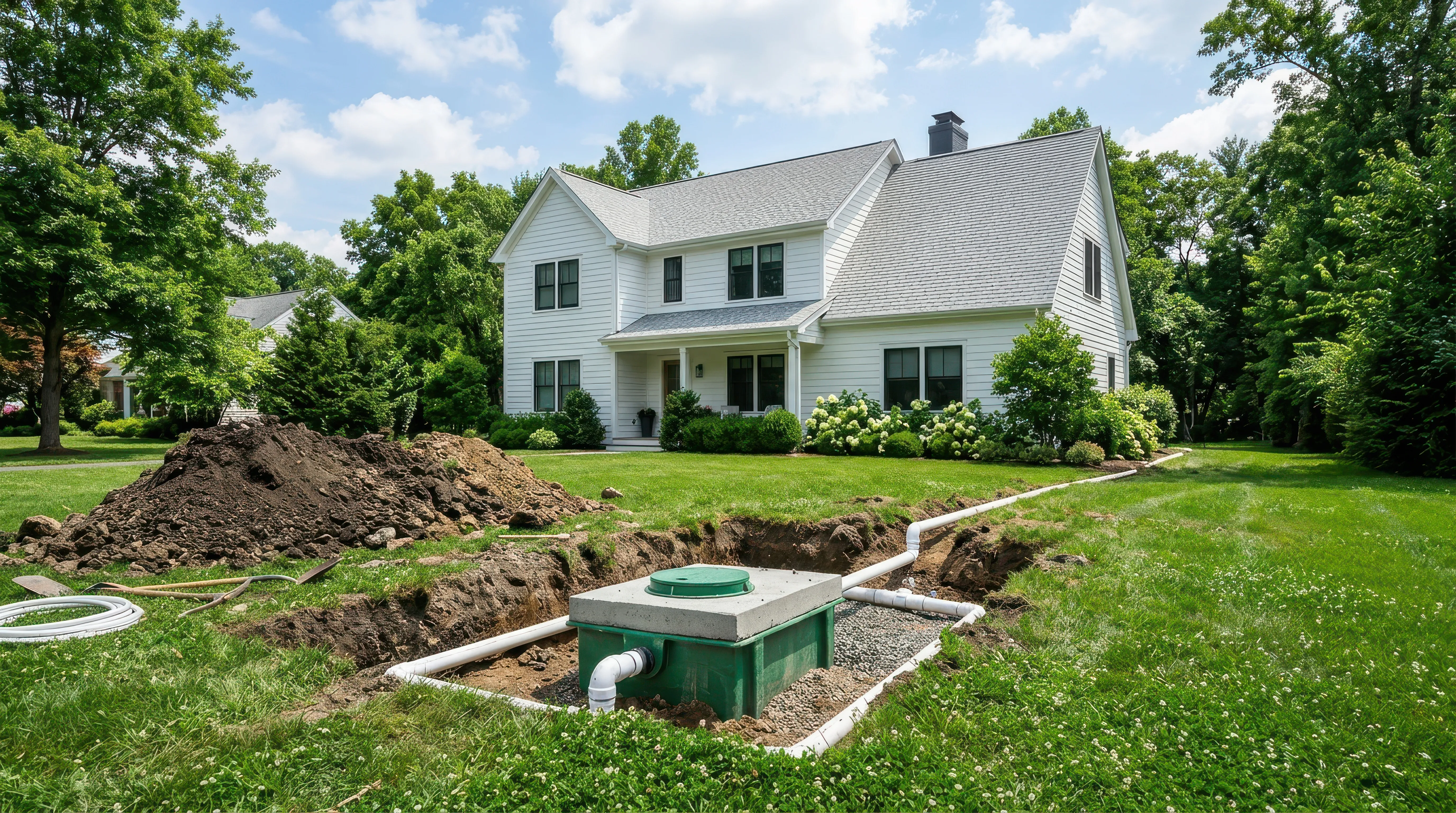
Yes. You can sell a house in Hudson, Massachusetts, after a failed Title 5 septic inspection. A failing system does not automatically prevent a property transfer, but the failure must be addressed under state law. Whether repairs happen before or after closing depends on the approved compliance plan, the purchase agreement, and—if the buyer needs a mortgage—the lender’s requirements.
For a homeowner who has just opened a disappointing inspection report, the immediate decision is not necessarily “replace the whole system.” It is to determine what failed, what Hudson will require, and which selling option leaves you in the best financial position.
This guide follows that decision from the inspection report through closing, including local contacts, possible repair arrangements, and an example comparing net proceeds. It is different from our general Hudson house-selling page: here, the starting point is an actual Title 5 problem.
What Does a Failed Title 5 Inspection Actually Mean?
Massachusetts Title 5 governs onsite sewage disposal systems, including private septic systems and cesspools. The inspection looks for conditions that may threaten public health or the environment. It is not a prediction of how long the system will last.
The official MassDEP Title 5 inspection form identifies four possible determinations:
- Passes. The inspector has not found applicable failure criteria, subject to anything the report says could not be evaluated.
- Conditionally passes. Particular components need an approved repair or replacement. Examples can include a damaged tank, obstructed pipe, uneven distribution box, or pump problem. Once the specified work is approved, the system can pass. A failing soil absorption system or cesspool cannot be corrected through this limited conditional-pass process.
- Needs further evaluation by the local approving authority. The inspector has identified conditions requiring a determination from the Board of Health. This is not automatically a final failed result. The next action depends on the circumstances recorded in the report.
- Fails. One or more applicable failure criteria were found. The owner must work with the appropriate authority to determine the required correction or upgrade.
For example, sewage surfacing in a yard can be a far more serious concern than a replaceable distribution-box component. Ask the inspector to identify the exact checked findings, not simply describe the system as “bad.” The MassDEP inspection guidance explains the distinction between inspection findings and the corrective steps that may follow.
What if the report says further evaluation is needed?
Contact the Hudson Health Department with the complete report before obtaining replacement bids. Ask which finding requires review, whether additional testing is needed, and who will make the final determination. Do not advertise the system as passing—or tell a buyer it has failed—until the required evaluation has established the result.
Can You Legally Close Before the Septic System Is Repaired?
Potentially, yes. MassDEP explains that a failed system generally must be upgraded within two years, unless the local Board of Health or MassDEP authorizes a different schedule. An imminent health hazard may require faster action. The obligation does not vanish if the owner decides to keep the house rather than sell it.
A seller and buyer may negotiate who pays for the work. Under applicable Title 5 provisions, an owner or purchaser can enter an enforceable agreement with the approving authority to upgrade the system or make an approved sewer connection within the permitted period. Such an agreement must meet regulatory conditions and bind subsequent owners where required.
Writing “buyer accepts septic as-is” in a contract does not waive environmental requirements. A post-closing plan should be reviewed with the Board of Health and a Massachusetts real estate attorney, and the buyer’s financing must support it.
Read the state’s buying and selling guidance before accepting a repair credit or promising a particular closing date. When a transaction is underway, the timing of the inspection, report delivery, and any exception or approved agreement matters as much as the negotiated price.
What Hudson Homeowners Should Do After a Failed Report
Avoid signing an installation contract before knowing what work is required.
1. Get the complete signed report
Ask for the full inspection form, all comments, and relevant supporting records. Check the date, property address, inspector identification, result, and specific failure criteria. Keep pumping records and prior system plans if you have them. The inspector generally submits the report to the local approving authority within 30 days; confirm that Hudson has received it.
2. Talk to Hudson’s Health Department
Hudson administers local septic requirements under Massachusetts Title 5. The town’s septic systems page links to local resources and states that installation, modification, upgrades, and abandonment must be handled by licensed septic installers.
Hudson Health Department
78 Main Street, Hudson, MA 01749
Phone: (978) 562-2020
You can confirm contacts and hours through the town’s Health Department page. Ask:
- Is the system confirmed failed, conditionally passed, or awaiting further evaluation?
- What work needs approval, and is an engineered design required?
- Does the department have older plans or permit records for this address?
- Could an enforceable post-closing upgrade arrangement apply?
- Is sewer connection an option for this specific parcel?
- What documentation will establish completion and compliance?
A nearby sewer line does not guarantee that connecting is feasible. Confirm access and costs.
3. Request comparable, written estimates
If an upgrade is needed, ask qualified professionals to separate engineering, soil testing, permits, equipment, excavation, installation, and restoration. Ask what assumptions could change the price once work starts. MassDEP’s consumer protection advice specifically recommends shopping around and checking credentials.
Hudson publishes septic-related application forms, including soil-evaluation and construction-permit applications. Its permits and applications page also explains online submission for many Health Department matters. Confirm the current procedure before beginning work.
4. Determine what a buyer and lender will accept
If an offer is already pending, notify the attorney promptly. Ask the buyer to obtain written lender guidance about any proposed repair-before-closing, escrow, or post-closing arrangement. A buyer may agree to take responsibility yet still be unable to obtain the intended mortgage.
5. Compare net proceeds—not just sale prices
Your decision should include cash needed now, likely construction surprises, carrying costs, sale expenses, and the value of avoiding a complicated project. Our Hudson selling and pricing guide discusses broader marketing decisions; the options below focus specifically on the failed septic system.
Three Ways to Sell a Hudson House After a Failed Title 5 Inspection
Option 1: Complete the approved repair, then list
Repairing first may appeal to the widest group of buyers, particularly those who need mortgage financing and do not want an unresolved wastewater problem. It also allows the seller to advertise the completed work with appropriate permits and documentation.
But a replacement project may require design changes, soil evaluation, contractor scheduling, inspections, and yard restoration. An incomplete estimate can lead to unexpected expenses. You may also carry the mortgage, taxes, insurance, and utilities longer than expected.
This route is most attractive when the scope is clear, the owner can fund it, and the likely additional sale proceeds justify both cost and uncertainty. Ask your agent to estimate the market value after the approved work, not the price of an imaginary perfect house.
Option 2: Negotiate a sale with a buyer who will address the system
A buyer may accept a lower price reflecting a necessary upgrade, or the parties may negotiate another payment arrangement. The exact structure should be clear: Does the agreed purchase price already account for the septic problem? Is there also a separate credit? Who bears the risk if the contractor finds an additional issue?
An approved post-closing arrangement may permit the buyer to assume responsibility. The Board of Health, contract, and—where relevant—mortgage lender must all align. Otherwise, the agreement may look workable on paper but fail just before closing.
Ask your attorney to ensure responsibility, deadlines, required notices, and what happens if approvals are denied are documented. Avoid counting the same repair allowance twice when comparing offers.
Option 3: Request a direct as-is cash offer
A direct buyer may consider a Hudson property without requiring the homeowner to undertake the replacement first. A cash purchase avoids a conventional mortgage lender’s underwriting requirements, although it does not eliminate Title 5 inspections, approvals, or upgrade obligations.
The offer will typically account for the system’s condition and the work the buyer expects to perform. It may be lower than the price of a fully repaired home, so compare the written net figure rather than assuming cash is always the best financial outcome.
Lehan Homes LLC evaluates houses in their existing condition. You can review how our buying process works and request a written offer if a direct sale suits your situation. Any agreement involving a failed septic system should explicitly allocate responsibilities and remain subject to applicable approvals.
Hudson Example: Repairing the Septic System vs. Selling As-Is
Imagine a homeowner whose property has a confirmed failed system requiring a substantial upgrade. An engineer and contractor have provided a preliminary $36,000 combined estimate. The homeowner wants to understand how a repair-and-list strategy compares with two as-is possibilities.
These numbers are hypothetical illustrations, not Hudson market statistics, actual contractor bids, or offers from Lehan Homes. They assume all legally required septic arrangements can be approved. Mortgage balances, liens, income taxes, and individual attorney expenses are excluded.
| Assumed transaction | Repair, then list | Sell as-is to financed buyer* | Direct cash sale* |
|---|---|---|---|
| Agreed sale price | $525,000 | $485,000 | $445,000 |
| Septic work paid by seller | $36,000 | $0 | $0 |
| Agent compensation (assumed) | $13,125 | $12,125 | $0 |
| Other seller transaction expenses | $5,500 | $5,000 | $2,500 |
| Carrying costs before closing | $3,000 | $2,500 | $1,000 |
| Illustrative proceeds before debt and taxes | $467,375 | $465,375 | $441,500 |
The as-is prices already reflect the buyer’s anticipated septic work; no additional septic credit is deducted. Both as-is scenarios depend on a legally acceptable plan. All seller expenses are assumptions, not promises about actual closing costs. Agent compensation is negotiable and is not fixed by law.
The repair-first option produces only $2,000 more than the financed as-is scenario under these assumptions, yet requires $36,000 before the sale and exposes the owner to potential overages. The direct cash scenario yields less, but may avoid managing that project altogether.
Different estimates or offers could change the ranking. Ask what you will take home and what you must risk to get there.
How Long Is a Title 5 Inspection Valid in Massachusetts?
For an ordinary property sale, the inspection generally must occur within two years before transfer. An inspection completed up to three years before transfer may be used when the report is accompanied by pumping records showing that the system was pumped at least once a year during the relevant period. Certain transactions have special rules or exceptions, and weather-related delays can affect permitted timing.
An older passing report is not automatically sufficient merely because the tank has been pumped recently. Verify the inspection date and supporting records with the MassDEP buyer/seller requirements and your closing attorney. If the report says fails, time alone does not turn that finding into a pass.
What If You Cannot Afford the Septic Work?
Before reducing the listing price by the first quoted amount, ask whether the system qualifies for a limited approved repair or requires a more extensive upgrade. Then investigate financing and assistance.
MassDEP lists potential help through community betterment programs, qualifying loans, and state tax provisions on its septic financial assistance page. Eligibility and availability vary. The Community Septic Management Loan Program operates through participating communities; it is not proof that Hudson currently offers an individual homeowner loan.
Massachusetts also provides a septic tax credit for qualifying work on an eligible primary residence. Check the current rules, limits, and documentation with a tax professional using the state’s Title 5 law resources.
If funding is unavailable, consider an as-is offer. Financial hardship does not remove Title 5 obligations.
What If Your Hudson House Is Inherited, Vacant, or Already Under Contract?
Inherited property: An executor may be handling a house with no recent pumping records or uncertain septic history. Some inheritance transfers have different inspection timing or family-transfer exceptions. Do not assume an inheritance automatically removes inspection requirements for a later sale. Confirm estate authority and Title 5 obligations with counsel.
Vacant property: Limited recent use can make performance harder to assess. A qualified inspector should document relevant conditions and any limitations. Do not treat the absence of backups in an empty house as evidence that the system passed.
Already under contract: Review inspection contingencies, disclosure provisions, financing deadlines, and the planned closing date with your attorney. A repair concession, delayed closing, or buyer-assumed upgrade should be put in writing and checked with the approving authority. If sewage is backing up or surfacing, raise the health concern immediately rather than waiting for the sale process.
A Practical Checklist Before Selling a Hudson House With a Failed Septic System
- Read the entire signed report and identify the exact determination.
- Confirm the report was submitted to the appropriate authority.
- Ask Hudson what work, testing, permits, and deadlines apply.
- Obtain comparable written estimates and confirm installer credentials.
- Check any lender requirements before negotiating a repair arrangement.
- Have your attorney document who pays, who performs the work, and what happens if approval fails.
- Compare true net proceeds, upfront cash, time, and risks.
How Lehan Homes LLC Fits Into the Comparison
Lehan Homes LLC is based at 49 Hunter Ave, Hudson, MA 01749 and evaluates qualifying properties in Massachusetts and Rhode Island. If you have a failed inspection report, you can share the property details and the findings so the company can assess whether an as-is purchase is feasible.
A direct offer is an option to compare, not a replacement for professional septic advice. Review the written purchase terms, including responsibility for corrective work and the actual seller costs, with your attorney. You can see our general home-buying FAQs or contact the team with questions.
To explore an offer without committing to the sale, request a no-obligation cash offer or call (508) 552-9758.
Frequently Asked Questions About Failed Title 5 Inspections in Hudson, MA
1. Can I sell my house in Hudson, MA, after a failed Title 5 inspection?
Yes. Massachusetts allows property transfers involving failed septic systems, provided the applicable inspection, disclosure, and upgrade requirements are addressed.
2. Do I have to replace my septic system before selling my house?
Not always. An approved post-closing upgrade arrangement may allow the buyer to assume responsibility. Requirements depend on the system, local approval, and financing.
3. How long do I have to fix a failed Title 5 septic system in Massachusetts?
Generally, two years after failure, unless the local Board of Health or MassDEP authorizes another schedule. Urgent health hazards may require faster action.
4. What does a conditional pass mean on a Title 5 inspection?
A conditional pass means certain components need approved repairs or replacement. Once the required work is completed and approved, the system can pass.
5. What if my Title 5 inspection requires further evaluation?
The local approving authority must review the identified conditions before determining the system’s status. Further evaluation does not automatically mean the system has failed.
6. Can a cash buyer purchase a Hudson house with a failed septic system?
Yes, potentially. A cash buyer may purchase the property under an appropriate arrangement, but the transaction must still comply with Massachusetts Title 5 requirements.
7. Will a failed Title 5 inspection affect my buyer’s mortgage approval?
It may. Some lenders require septic repairs before closing, while others may accept certain approved arrangements. The buyer should confirm requirements directly with the lender.
8. Who pays for septic repairs when selling a house in Hudson, MA?
The buyer and seller can negotiate repair costs. However, their agreement must comply with applicable septic regulations and any required upgrade obligations.
9. How long is a Title 5 septic inspection valid in Massachusetts?
Generally, two years for a property sale, or up to three years with qualifying annual pumping records. Certain transactions have special rules.
10. Who should I contact after a failed Title 5 inspection in Hudson?
Contact the Hudson Health Department at (978) 562-2020 to confirm the required corrective work, permits, deadlines, and possible post-closing arrangements.
Final Thoughts: Compare Your Options Before Paying for Septic Repairs
A failed Title 5 inspection changes the sale calculation, but it does not make a Hudson property unsellable. First, find out exactly what the inspection says. Next, learn what the town will approve. Then compare the realistic cost of repairs with offers that clearly assign responsibility for the system.
If repairing first produces the best net result and you can manage the project, that may be your answer. If the expense or uncertainty is too great, an approved as-is sale deserves consideration. Lehan Homes LLC can evaluate your Hudson property and discuss whether a direct purchase is an option.
Request Your No-Obligation Cash Offer or call (508) 552-9758.
This article is general educational information, not legal, engineering, tax, or lending advice. Confirm the requirements for your property with the Hudson Health Department and appropriate licensed professionals.