
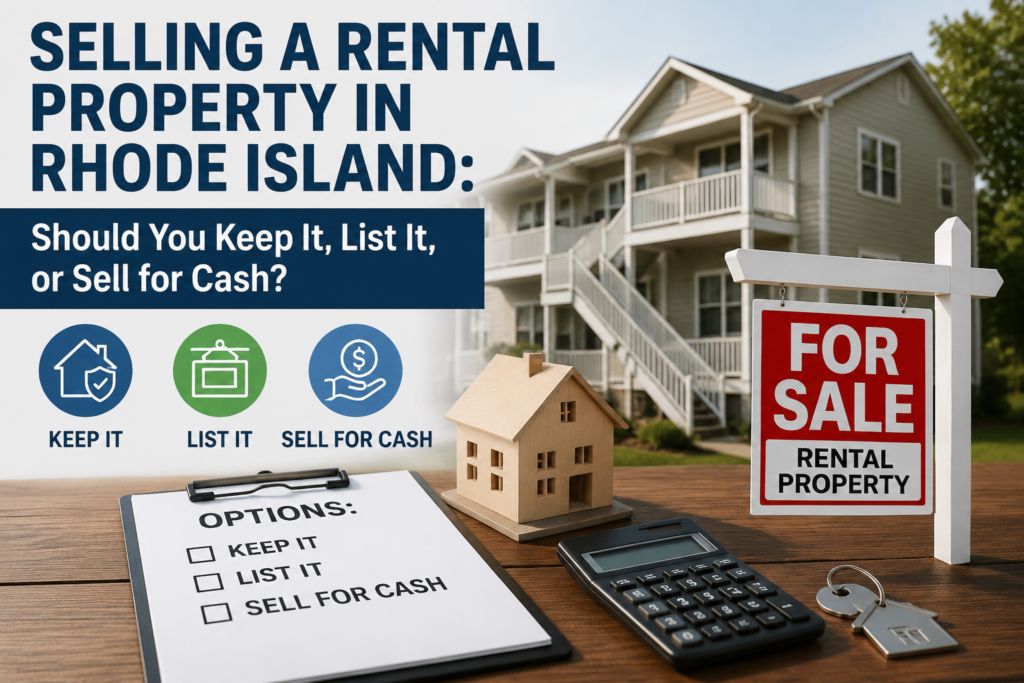
Owning a rental property can be a great long-term investment, but there comes a time when many landlords ask the same question:
“Should I keep renting this property, sell it through a real estate agent, or sell it directly to a cash buyer?”
The right choice depends on your goals, finances, property condition, tenant situation, and how much time you want to spend managing the home.
For some Rhode Island landlords, keeping the property creates steady rental income and long-term appreciation. For others, selling makes more sense because of repairs, difficult tenants, rising expenses, or the desire to move on from property management.
If you are considering selling your rental property in Rhode Island, understanding your options can help you make a better decision.
Should You Keep, List, or Sell a Rental Property?
A rental property may be worth keeping if it produces reliable income, requires minimal maintenance, and fits your long-term investment goals.
Selling through a real estate agent may be better if your property is in good condition and you are willing to wait for the right buyer.
Selling to a cash home buyer may make sense if you want a faster sale, want to avoid repairs, or own a property that needs significant work.
The best option depends on your timeline, property condition, and financial goals.
Why Rhode Island Landlords Decide to Sell Rental Properties
Many rental owners do not sell because they dislike real estate investing. They sell because circumstances change.
Common reasons landlords sell include:
1. The Property Requires Too Many Repairs
Older homes are common throughout Rhode Island. Many rental properties were built decades ago and may eventually need:
- Roof replacement
- Plumbing updates
- Electrical repairs
- Heating system improvements
- Foundation repairs
- Kitchen or bathroom renovations
For some landlords, continuing to invest money into an aging property no longer makes financial sense.
Instead of completing expensive upgrades, some owners choose to sell the property as-is.
Related:
Sell Your House As-Is in Rhode Island
2. Managing Tenants Has Become Stressful
Being a landlord requires more than collecting rent.
Owners often deal with:
- Late payments
- Maintenance requests
- Tenant turnover
- Lease disagreements
- Property damage
- Emergency repairs
While good tenants can make rental ownership rewarding, difficult situations can become overwhelming.
Some landlords decide their time and stress are more valuable than continuing to manage the property.
3. Rental Income Is No Longer Worth the Effort
A rental property may look profitable on paper, but expenses can reduce your actual return.
Consider:
- Mortgage payments
- Property taxes
- Insurance
- Maintenance
- Vacancy periods
- Property management fees
- Unexpected repairs
A property producing monthly rent does not always mean it is producing strong profits.
Keep Your Rental Property
Keeping the property can be a good choice if your rental investment is performing well.
Benefits of Keeping a Rental Property
Monthly Rental Income
A well-managed rental can provide consistent income.
Long-Term Appreciation
Real estate values may increase over time, allowing owners to build equity.
Tax Benefits
Rental property owners may benefit from certain tax deductions. Always consult a qualified tax professional for advice specific to your situation.
Future Financial Security
Some investors keep rental properties as part of a long-term wealth strategy.
When Keeping the Property Makes Sense
Keeping your rental may be the right choice if:
- The property has reliable tenants
- Rental income covers expenses
- Repairs are manageable
- You have time to manage the property
- You want long-term appreciation
However, keeping a rental is not always the best financial decision.
Questions to Ask Before Keeping Your Rental Property
Before deciding, ask:
Is the property actually profitable?
Calculate your true monthly income after:
- Mortgage
- Taxes
- Insurance
- Repairs
- Maintenance
How much future maintenance will it need?
A property requiring major repairs may reduce your future returns.
Do you still want to be a landlord?
Sometimes the biggest cost is not money. It is time and stress.
Sell Your Rental Property Through a Realtor
Selling with a real estate agent is a traditional option many homeowners consider.
A realtor can help:
- Determine market value
- Market the property
- Schedule showings
- Negotiate offers
- Handle paperwork
For rental properties in good condition, this may help attract buyers who want a move-in-ready home.
Benefits of Selling With a Realtor
Potentially Higher Sale Price
A competitive market listing may attract multiple buyers.
Professional Marketing
Agents typically handle:
- Photography
- Online listings
- Buyer communication
- Negotiations
Access to Traditional Buyers
You may reach homeowners looking for a property they can occupy.
Challenges of Selling a Rental Property Traditionally
Selling through the market also comes with challenges.
Repairs Before Listing
Many buyers expect homes to be clean and updated.
You may need to invest in:
- Painting
- Flooring
- Repairs
- Cleaning
- Improvements
Longer Timeline
Traditional sales may take weeks or months depending on:
- Market conditions
- Buyer financing
- Inspections
- Negotiations
Tenant Considerations
If tenants currently occupy the property, you may need to coordinate:
- Showings
- Lease requirements
- Move-out timing
Sell Your Rental Property for Cash in Rhode Island
For many landlords, selling directly to a cash home buyer can be an attractive option, especially when the property needs repairs, has tenant challenges, or the owner wants a faster and simpler sale.
Cash buyers typically purchase homes in their current condition, which means you may not need to spend time or money preparing the property for the market.
This option is often considered by landlords who want to:
- Avoid costly repairs
- Sell a difficult rental property
- Avoid lengthy listing processes
- Move on from property management
- Sell a vacant or inherited rental home
A company like Lehan Homes helps Rhode Island homeowners explore cash sale options when selling a property quickly and without the traditional selling process.
Related:
How Cash Home Buyers Work in Rhode Island
How Selling a Rental Property for Cash Works
The process is usually straightforward:
1. Contact a Cash Home Buyer
You provide basic information about the property, including:
- Location
- Property condition
- Current occupancy status
- Your preferred timeline
2. Receive a Cash Offer
The buyer reviews the property details and determines an offer based on factors such as:
- Current market conditions
- Property condition
- Repair needs
- Comparable sales
- Future investment potential
3. Choose Your Closing Date
If you accept the offer, you can usually choose a timeline that works for your situation.
Some sellers prefer a faster closing, while others need additional time to transition tenants or handle personal matters.
4. Complete the Sale
After paperwork is completed, ownership transfers and you can move forward without the responsibilities of managing the rental.
Cash Buyer vs Realtor: Which Is Better for a Rental Property?
There is no single answer for every landlord. The right choice depends on your priorities.
| Cash Buyer | Realtor | |
|---|---|---|
| Selling speed | Usually faster | Usually longer |
| Repairs required | Often no repairs needed | May require preparation |
| Showings | Usually limited | Multiple buyer showings |
| Tenant disruption | Usually easier to manage | May require more coordination |
| Price potential | Based on property condition and offer | Potentially higher market price |
| Convenience | Simple process | More steps involved |
A traditional listing may work well for landlords with a property in excellent condition who are willing to wait.
A cash sale may be more suitable for owners who value speed, convenience, and avoiding additional expenses.
Selling a Rental Property With Tenants in Rhode Island
One of the biggest concerns landlords have is:
“Can I sell my rental property if tenants are still living there?”
The answer is often yes, but the process requires planning.
Important considerations include:
Review the Lease Agreement
Before selling, understand:
- Current lease terms
- Tenant rights
- Notice requirements
- Move-out agreements
Communicate Clearly With Tenants
Good communication can help avoid unnecessary problems.
Tenants may have concerns about:
- Showings
- New ownership
- Lease continuation
- Moving timelines
Consider Selling to a Buyer Familiar With Rental Properties
Some buyers, including investors and cash buyers, may be more comfortable purchasing occupied rental properties.
Related:
Sell House With Tenants in Rhode Island
Should You Sell a Rental Property That Needs Repairs?
Many landlords hesitate to sell because their property is not in perfect condition.
However, rental properties often have:
- Deferred maintenance
- Older systems
- Cosmetic issues
- Tenant-related wear and tear
The important question is not:
“Can I fix everything?”
The better question is:
“Will the cost of repairs increase my final return enough to justify the time and money?”
Example:
Imagine a Rhode Island rental property needs:
- $12,000 roof repair
- $8,000 electrical updates
- $10,000 kitchen improvements
A landlord may spend $30,000 preparing the property for sale.
Before investing that money, compare:
- Expected increase in sale price
- Time required
- Stress involved
- Alternative selling options
Sometimes selling as-is may be the better financial decision.
Related:
Selling a House That Needs Repairs in Rhode Island
Costs to Consider When Selling a Rental Property in Rhode Island
Before selling, landlords should understand possible expenses.
Common costs may include:
Realtor Commission
Traditional sales usually involve agent commissions.
Repairs and Improvements
Many sellers invest money before listing.
Closing Costs
Depending on the transaction, sellers may pay certain closing-related expenses.
Taxes
Selling an investment property may have tax implications, including potential capital gains considerations.
Always speak with a qualified tax professional regarding your personal situation.
When Selling Your Rental Property Makes More Sense
Selling may be the better choice if:
✅ The property requires major repairs
✅ Rental income is declining
✅ Managing tenants has become stressful
✅ You want to access your equity
✅ You are relocating
✅ You inherited the rental property
✅ You no longer want landlord responsibilities
How to Decide: Keep, List, or Sell for Cash?
Use this simple decision guide:
Keep the Property If:
- It produces consistent income
- You enjoy managing rentals
- The property has strong future potential
List With a Realtor If:
- The property is in good condition
- You want maximum market exposure
- You can wait for the right buyer
Sell for Cash If:
- You want a faster sale
- The property needs repairs
- You want fewer complications
- You want to avoid traditional selling steps
Frequently Asked Questions
Can I sell my rental property in Rhode Island with tenants?
Yes, you can often sell a rental property with tenants, but you should review the lease agreement and follow Rhode Island landlord-tenant requirements.
Is it better to sell a rental property with a realtor or cash buyer?
It depends on your priorities. Realtors may help reach more buyers, while cash buyers may provide a faster and simpler selling process.
Do I need to repair my rental property before selling?
No. Some buyers purchase rental properties as-is, allowing owners to sell without completing major repairs.
How fast can I sell a rental property in Rhode Island?
The timeline depends on the selling method. Cash sales may happen faster than traditional listings because they usually involve fewer steps.
Should I sell my rental property if tenants are causing problems?
Selling may be an option if tenant management has become stressful or the property is no longer meeting your investment goals.
Do cash home buyers purchase rental properties?
Yes, many cash buyers purchase rental properties, including homes that need repairs, have tenants, or require updates.
Final Thoughts: Choosing the Right Way to Sell Your Rental Property in Rhode Island
Selling a rental property is a major decision, and the best option depends on your financial goals, timeline, property condition, and willingness to continue managing the property.
Keeping the rental may make sense if it provides reliable income and fits your long-term investment plans. Listing with a real estate agent may be a good choice if the property is in good condition and you want maximum exposure in the market. Selling for cash can be a practical alternative if you want to avoid repairs, reduce complications, or move forward with a simpler selling process.
Before making a decision, take time to compare your expected costs, potential returns, and the amount of time and effort each option requires. A property that once made sense as a rental may not always remain the right investment as circumstances change.
If you are considering selling a rental property in Rhode Island, Lehan Homes LLC can help you understand your available options and determine whether a cash sale fits your situation. A clear understanding of your choices can help you make a confident decision that matches your goals.